

Virtual Miki County 33 Kannon Pilgrimage #2 Kongo-ji Temple
Kongo-ji Temple was founded in 651 by Hodo, who traveled from India through Tang China and the Korean kingdom of Baekje to Japan from the 6th to 7th centuries.
Kongo-ji Temple burned down when Toyotomi Hideyoshi (1536-1598) attacked Miki Castle. The head priest at the time, Ryosei, requested the restoration of Kongo-ji Temple through the mediation of Omura Yuko, a former monk of Kongo-ji Temple, who was Hideyoshi's assistant. The restoration was subsequently granted, and a thatched roofed main hall was built in 1580.
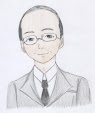
For your information, Raionbo was a monk at Aoyagi-san Choraku-ji Temple, a sub-temple of Kongo-ji Temple in Omura Village, Miki County, Settsu Province. In his youth, he studied classical Chinese under Priest Shugyo (1483-1574), who was the 91st head priest of Shokoku-ji Temple in Kyoto, and cultivated the art of tanka poetry by visiting various tanka masters. He became known for his profound knowledge. He is said to have become an assistant scribe of Hideyoshi when he besieged Miki Castle from 1578 to 1580 and ruled Omura Village. Raionbo is thought to have changed his name to Omura Yuko in those days. When Hideyoshi made the Great Chugoku Retreat in 1582, Yuko participated in a military council at Himeji Castle. He might have already established himself as Hideyoshi's confidant by this time. That same year, he became the head priest of Tenman-gu Shrine in Osaka.
While Hideyoshi was unifying Japan, Yuko not only served as an attendant but also wrote Hideyoshi's military chronicle, the Tenshoki. The work emphasizes Hideyoshi's greatness. Yuko seems to have served as a spokesman for the legitimacy of the Toyotomi Regime.
During the Imjin War in 1592, Yuko accompanied Hideyoshi to Nagoya in Hizen Province. Hideyoshi's devotion to Noh play at the time was so great that, not content with simply performing existing works, Hideyoshi is said to have commissioned Yuko to compose new Noh plays to commemorate Hideyoshi's own exploits for future generations. Yuko's new Noh plays, "Cherry Blossom Viewing at Yoshino," "Pilgrimage to Koyasan," "The Attack on Akechi," "The Attack on Shibata," and "The Attack on Hojo," all feature Hideyoshi in the lead role. Hideyoshi personally performed "The Attack on Akechi" at Osaka Castle on March 15th, 1594, and at the Imperial Palace on April 12th, indicating that it was a favorite of Hideyoshi.
In addition to the war chronicles and new Noh plays mentioned above, Yuko also displayed a wide range of talents in Noh, tanka poems, renga poems, haikai poems, and kyoka poems. He was also known to have had friendships with intellectuals of his time, including Fujiwara Seika (1561-1619), Yamashina Tokitsugu (1507-1579), Satomura Joha (1525-1602), and others. He also had a deep knowledge of ancient calligraphy, having written the Baian Kohitsuden, Biography of Ancient Calligraphy. Baian was his pseudonym.
Omura Yuko died on May 7th, 1596, at Tenman-gu Shrine in Settsu Province at the age of 60.
Address: 1041 Omura, Miki, Hyogo 673-0404
Phone: 0794-82-0722
Shokoku-ji Temple
Address: 701 Sokokuji Monzencho, Kamigyo Ward, Kyoto 602-0898
Phone: 075-231-0301
Himeji Castle
Address: 68 Honmachi, Himeji, Hyogo 670-0012
Phone: 079-285-1146
Osaka Tenman-gu Shrine
Address: 2 Chome-1-8 Tenjinbashi, Kita Ward, Osaka, 530-0041
Phone: 06-6353-0025
Nagoya Castle Ruins
Address: 1931-3 Chinzeimachi Nagoya, Karatsu, Saga 847-0401
posted by kakutaharuo | 2:52 PM

0 Comments:
Post a Comment
<< Home